A Life in Words,
Drawn to the Wordless Stage
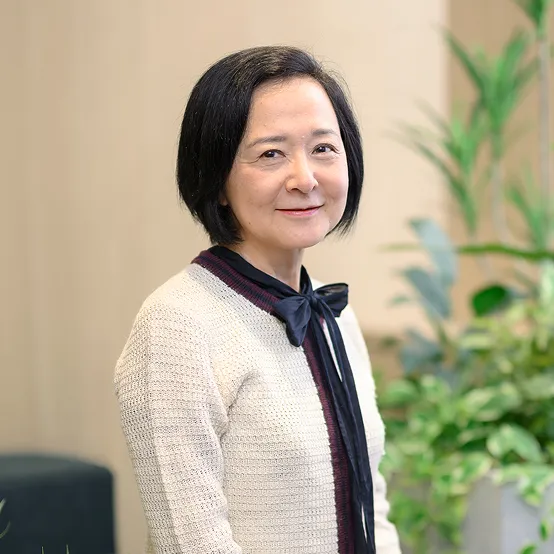
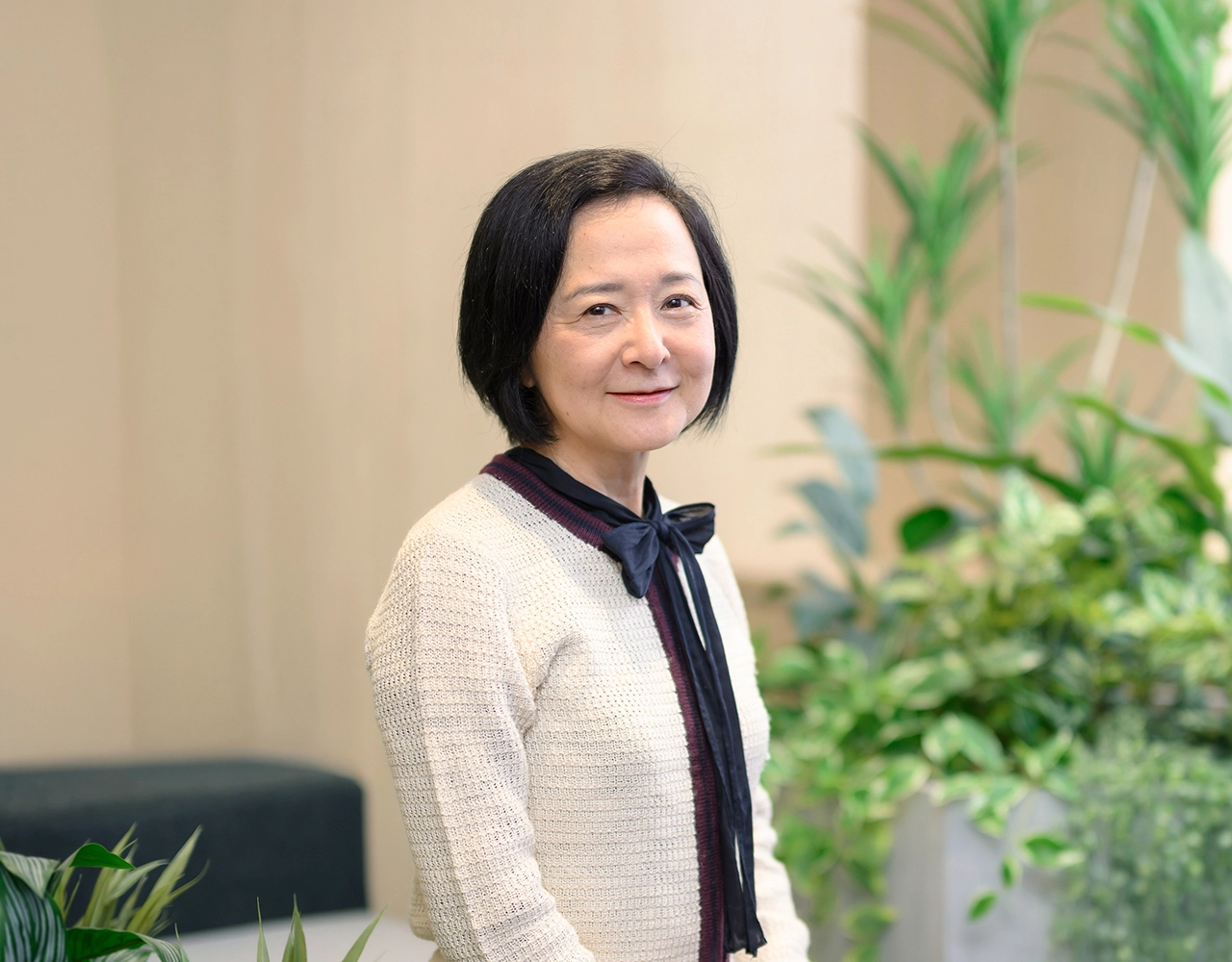
Yoko Ogawa Novelist
Yoko Ogawa made her debut in her twenties and has since published many acclaimed works, including The Housekeeper and the Professor. Theater arrived later in her life, but she was soon completely captivated by it.
Ogawa was first struck by the realization that no live performance can ever happen the same way twice. That same fascination drew her to the people working behind the scenes. Her new novel, Gekijō to iu na no seiza (A Constellation Called Theater), follows the people who keep each performance alive at the Imperial Theatre in Tokyo. Here, she talks about what a stage can teach a writer who has spent her life in words, and how it reshaped her entire creative outlook.
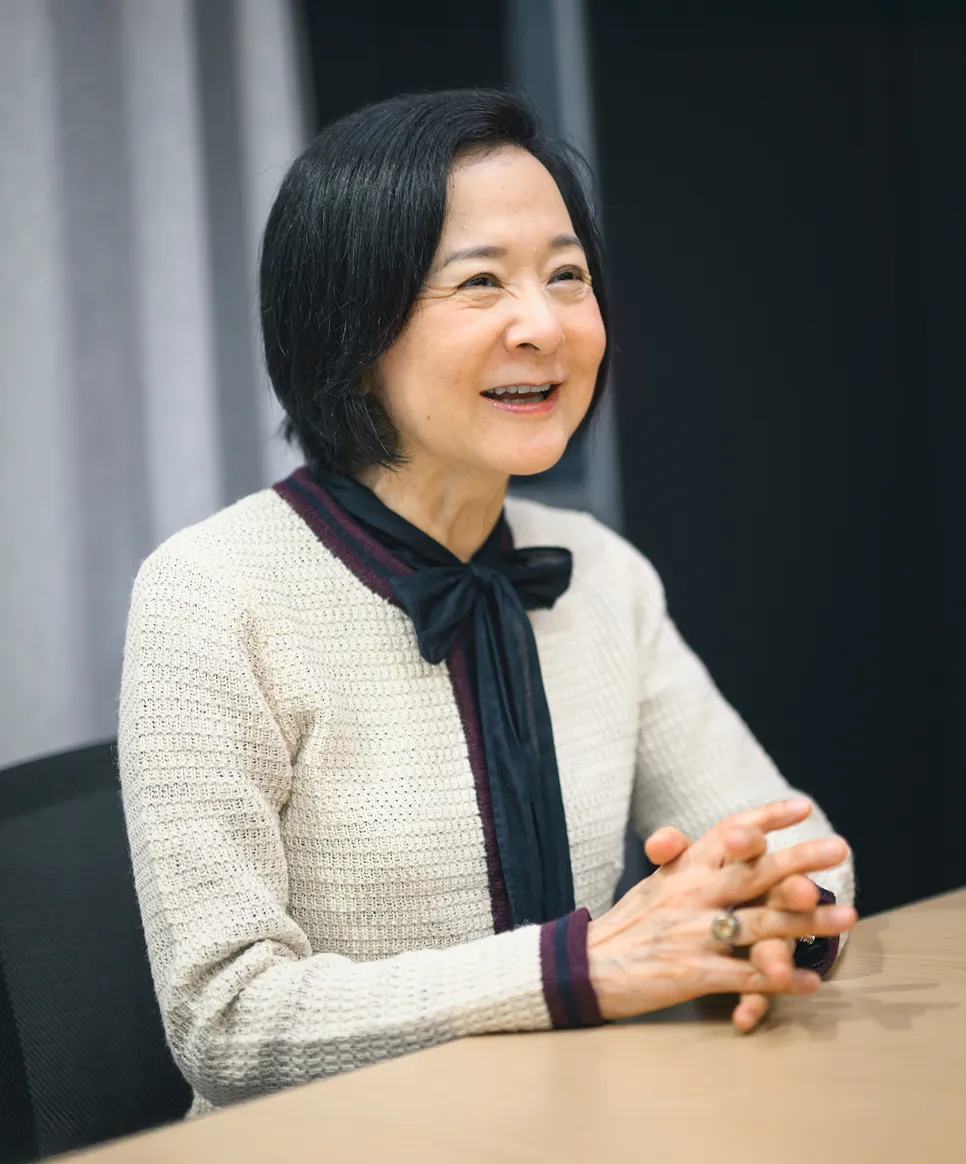
Away from the rush, discovering the magic of theater
Although Yoko Ogawa made her debut as a novelist in her twenties, many years had passed before she discovered the appeal of the stage.
"After my first book came out, work and raising my son filled every hour, and that went on for years. It was very hectic. I would take the bullet train up to Tokyo for work and spend the whole ride worrying about everyday things, like 'what am I going to put in tomorrow's lunchbox?' I was invited to the theater every now and then, but I was not in a state of mind to enjoy them."
The turning point came once her son was older and she had a little more time to herself. Her editor invited her to a ballet. Then bunraku, then a musical. Somewhere in that time, she had become completely absorbed in the world of live performance.
"It feels as though I was led to it at exactly the right moment in my life."
As One Who Lives by Words, Overwhelmed by Wordless Expression
In ballet, the human body alone captures an audience’s attention. In bunraku, puppets that never speak carry the full weight of feeling. Ogawa works in words for a living. Maybe that’s why she found herself so drawn to forms of expression that do not require them.
"Words are tools made by humans. They are useful, but tools have limits, and sooner or later tools come up against a wall that limits them. Literature, the way I see it, is what stands in front of that wall, constantly struggling to overcome it. And then I watched dancers and puppets step over that wall as if it were nothing. Seeing that happen, it was truly impressive, shocking even."
It was not long before she also overcame her former reluctance toward musicals.
"Some feelings only come through in song. When a character sings, the audience gets to hear what's happening inside their head. We are given a special kind of access to the voice underneath the character. That voice is a form of thinking, of expression, one that would never otherwise make a sound or become speech. The novelist in me felt something difficult to name, something close to a mix of envy and longing."
The stage, and where it took her writing
Ogawa's growing fascination with the stage came during a difficult stretch in her own work, a time when the writing kept hitting a wall.
"The longer you do this, the more you write, the more clearly you see your own shortcomings. When I was young I could write on momentum and blind confidence.
But once you start to understand things, a voice keeps nagging at you, asking, 'is this really good enough?' The more of a career you build, the harder writing a novel gets."
The stage was what showed her the way through.
While she was researching the Imperial Theatre, the people working there showed her archival footage of its original 1966 production of Gone with the Wind. The show became famous for a scene that looked as though a real horse were galloping across the stage.
"You can put a real horse on the stage, but of course it isn't actually galloping. And yet the audience sees it gallop anyway. I was amazed by the brilliance of that effect, that the stage could turn a lie into truth."
She also saw Mozart! performed live, and it surprised her in a different way.
"There's the grown actor playing Mozart, and then, set apart from him: his talent itself, externalized in the form of another character, played by a child called Amade. His talent was given a living, breathing form, an entirely distinct physical body. Only theater can do something like that."
These many forms of theatrical magic, from different times and places, became a powerful source of inspiration for her own writing.
"People standing up off the page, throwing off sweat, their voices ringing out. That was the novel I'd wanted to write all along, I realized. Of course that would be difficult. But if the stage can make a lie true, and make a contradiction stop being a contradiction, then a novel must be able to work that same magic. I've come to believe that I have to write books that pull you in with words and then, ultimately, take you beyond them."
Looking ahead, giving everything to the moment
"Buying a ticket is a promise you make with the future. You say yes to today, and you buy a dream of what's ahead. That's part of the value of the stage, I think."
When Ogawa first became interested in theater, she would often regret not having discovered it sooner.
"At a fan meetup for an actor, someone told me, 'You're lucky to have found it now.' And I thought, yes, that's exactly right. Theater people don't dwell on what's gone. They hold on to each moment as it comes. I find that attitude deeply encouraging."
A live performance at a theater happens once and never again. The resolve of the people who hold up each passing moment, their clarity and commitment, is what she poured into her new novel, Gekijō to iu na no seiza (A Constellation Called Theatre).
"No matter what the production is, the exact set of performers and crew in the room that night will never come together again. And they give everything they have to hold up that one moment. I think that's why I find myself so powerfully drawn to the stage."
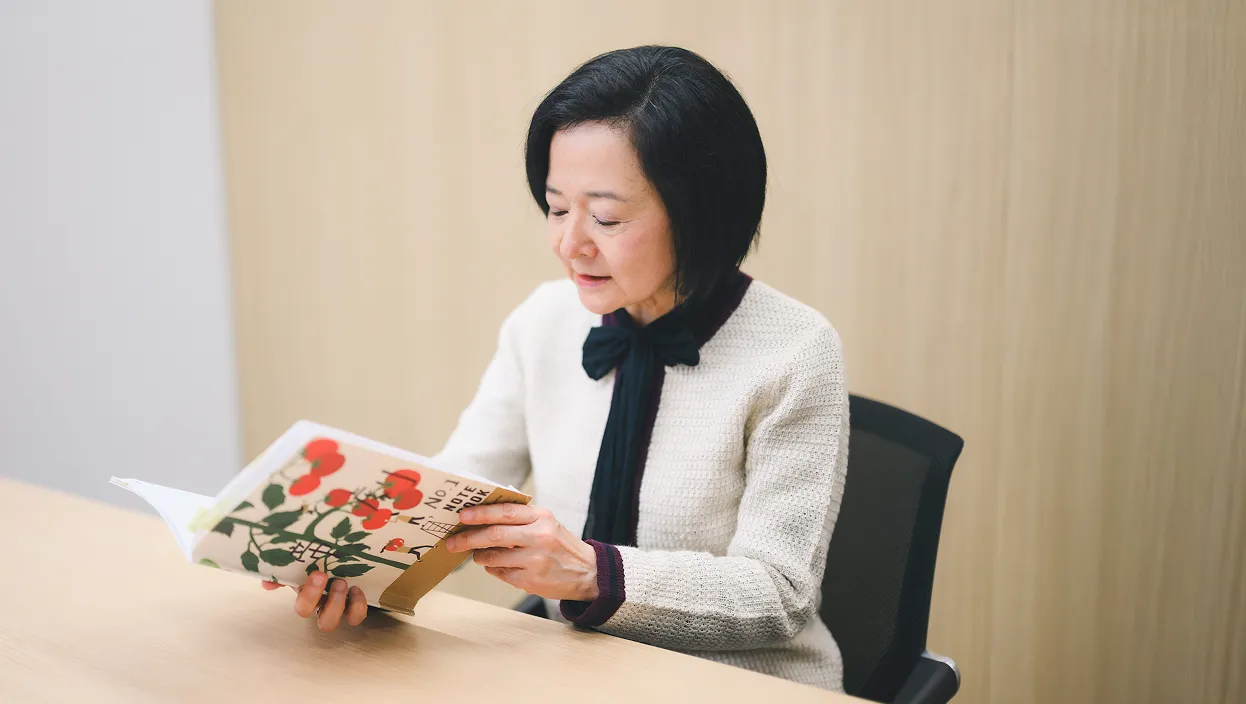
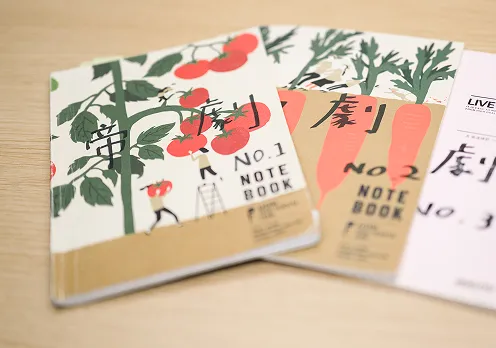
Novelist Yoko Ogawa
Born in Okayama Prefecture in 1962, Yoko Ogawa made her literary debut in 1988, when her short story "Agehachō ga Kowareru Toki" (The Breaking of the Butterfly) won the Kaien New Writer Prize; the story was collected the following year in her first book, the short story collection Kanpeki na Byōshitsu (The Perfect Hospital Room). She went on to receive the Akutagawa Prize in 1991 for "Pregnancy Diary," the Yomiuri Prize for Literature and the Booksellers Award in 2004 for The Housekeeper and the Professor, and the Tanizaki Junichiro Prize in 2006 for Mina's Matchbox.
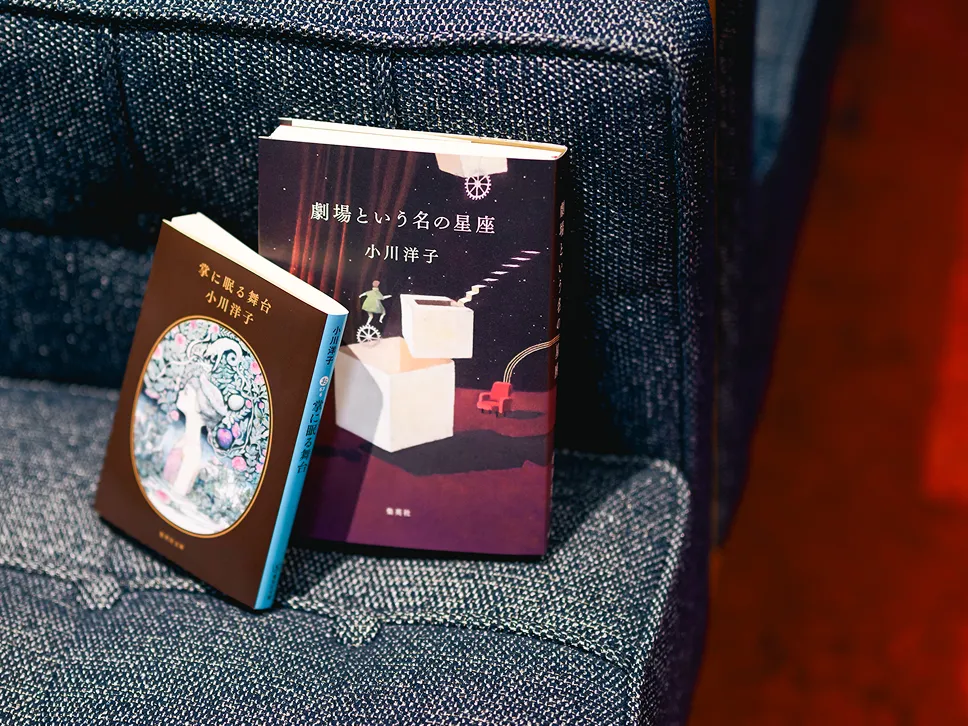
Her recent books include Tenohira ni Nemuru Butai (The Stage Sleeping in the Palm), a 2022 story collection that takes theater and live performance as its subject, and Gekijō to iu na no seiza (A Constellation Called Theatre), a novel about the Imperial Theatre, which she loves, and about the people who helped create and sustain it until its temporary closure for reconstruction in February 2025.