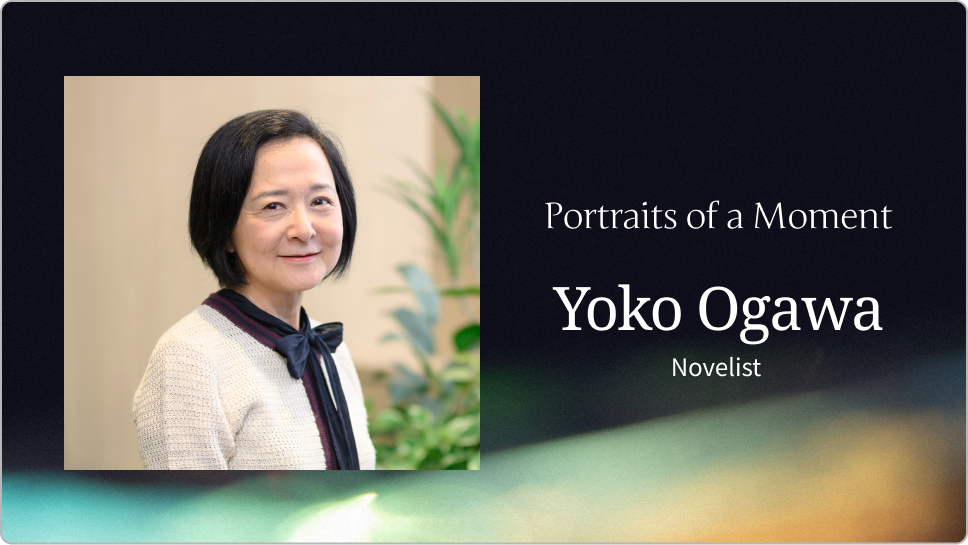
Magic on Stage: A Conversation with Novelist Yoko Ogawa


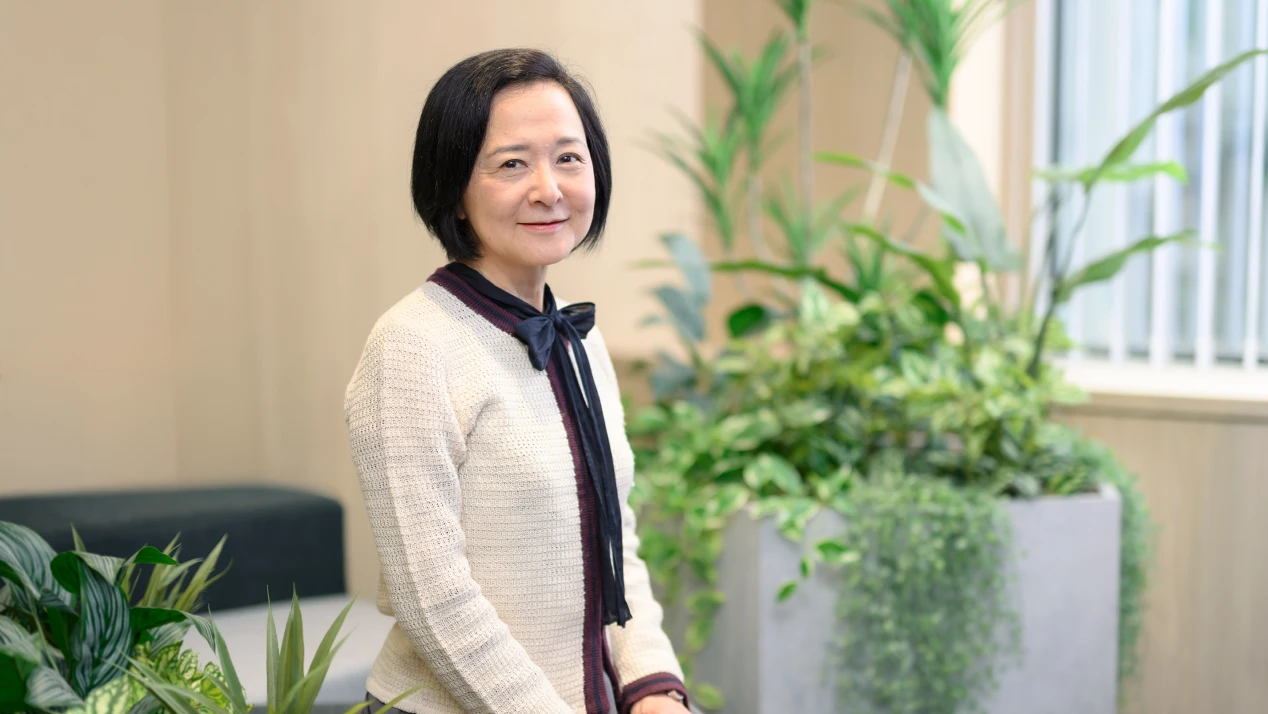
Yoko Ogawa made her debut in her twenties and has since written many acclaimed works, including The Housekeeper and the Professor.
After establishing herself as a novelist, with her son grown and out of the house, Yoko Ogawa found herself at a quieter point in her life as a mother. She had more time to reflect, more time to consider her own state of mind and how she wanted to grow as an artist. Then, an editor invited her to a live performance at the theater, where she discovered, later in life, that the stage was exactly what she had been missing.
We spoke with Ogawa about how theater has influenced her creative work and about the thoughts she poured into Gekijō to iu na no seiza (A Constellation Called Theater), published in Japan in March 2026.
A life spent writing, and then, a late arrival at the theater
Theater crosses the wall literature struggles against
When the lines between reality and fiction blur, a kind of truth appears
Inviting readers onto the stage in her mind
Searching for a tangible experience no screen can replicate
To say yes to the present and dream of the future
A life spent writing, and then, a late arrival at the theater
――What first brought you to the theater?
For a long time the stage had nothing to do with my life. From my debut in my twenties I was frantic to keep writing, and at home there was a birth, and then a child to raise, and the days went by in a rush.
I live outside Tokyo, so even when work brought me into the city, my head was full of other things: “I have to get back home on the earliest possible bullet train,” or “What am I going to put in tomorrow's lunchbox?” I was not in the frame of mind to sit alone in a theater and give myself over to a performance.
Then I met an editor who loved ballet, and I warmed up to it. My son had grown by then and I finally had a little more space in my life. "You should really see this one," she would say, and she took me to performances by ballerinas at the height of their abilities, and to the great international ballet companies when they toured Japan. That was how I started going.
――What did you make of it?
I was stunned. Bodies saying nothing, no words at all, and yet holding an audience for two hours, three hours. I had no idea such a world existed. After that I began going to bunraku, and there too I was overwhelmed, this time by puppets that never spoke a word and somehow conveyed more feeling and emotion than a human. I felt like I was allowed to experience the stage at exactly the right moment in my life, as if the timing had somehow been arranged for me.

Theater crosses the wall literature struggles against
――How did musicals come into it?
To be honest, I avoided musicals for years without ever having tried one. Something about people bursting into song in the middle of a play struck me as unnatural. Then, in 2016, I saw Jersey Boys at Theatre Creation, and my whole position changed.
The music, the singing, the body, all of it was woven so naturally into the story, as though it had always belonged there. And there were moments when the voice went past what the words could mean. That was when I finally understood that there are emotions that can only be conveyed through song.
Songs heard on a stage really are a mysterious, magical thing. A singing voice can also be the inner voice of the character. So all of us in the audience are given special access to a form of thinking, of expression, that never becomes speech. Once I saw that, I watched what was happening up there with something I can only call envy, and a longing, as a novelist, to do the same thing.
――Why envy?
Words are a tool made by humans. They are useful, of course. But because they are tools, they inevitably come up against a wall that limits them. How do you move the reader out past that wall? Literature, the way I see it, is what stands in front of that wall, struggling against it.
On stage, though, dancers and actors go over the wall as though it were nothing at all. Perhaps it took all those years of writing before I could look at that and think, “this is the kind of expression I have been searching for the whole time.” I want to write novels that take the reader clean through the words, through the limits of language, and out into what lies beyond them. Theater taught me what that form of expression might look like in practice.
When the lines between reality and fiction blur, a kind of truth appears
――What do you think is the real pleasure of the theater?
Going to see one great production after another, Les Misérables, Miss Saigon, Fiddler on the Roof, I began to notice something. The audience is granted the privilege of becoming a witness.
Take Les Misérables, for example. In the final scene, when the dead appear together on stage, Cosette and Marius cannot see them. Only the audience sees everyone. We are shown what even the characters are not allowed to see. In that sense, the theater is a special place, one where you can meet the dead.
The other thing I noticed is that when reality and story melt into each other, a certain kind of truth makes itself known.
Mozart!, for example, is a uniquely strange work, in which the grown Mozart's musical life is held up by Amade, the child prodigy he once was. Amade, a child's role, never speaks a line; he is talent itself, given a body. It’s a fictional device, obviously. But there are truths that can only be shown because they are fiction. Fiction becomes truth. The stage is a place where that kind of magic can reveal itself.
Inviting readers onto the stage in her mind
――Much of your recent work explores theater and even the stage itself. Tell us about your process.
Tenohira ni Nemuru Butai [The Stage Sleeping in the Palm] and Gekijō to iu na no seiza [A Constellation Called Theater] reflect what I felt as a member of the audience and what I learned through research. For Gekijō to iu na no seiza in particular, I interviewed many of the people who worked behind the scenes at the Imperial Theatre.
Ushers. The dressers who attend to the actors. The pianists who play for rehearsals. All of them are experts of their craft, quiet and highly skilled in what they do. When they did speak, out would come a single sentence that went straight to the heart of things. Not one of them had any interest in being the star. Their pride was in supporting theater as a whole.
The way those people carried themselves, the fine detail of each job, stirred my imagination enormously. They gave me the energy to write, too.
When I write a novel, a vivid image of a stage rises in my mind, and I have the sense that I am putting that image into words. It is as if I have stepped into that world myself and am watching the story unfold there. But the place where I stand is not center stage, where the lead actor stands. I am hidden behind the scenery, the set pieces, watching the stage from where no one in the seats can see me. Then I turn what I see into language, and take the reader into the world of the story. That is what it feels like.
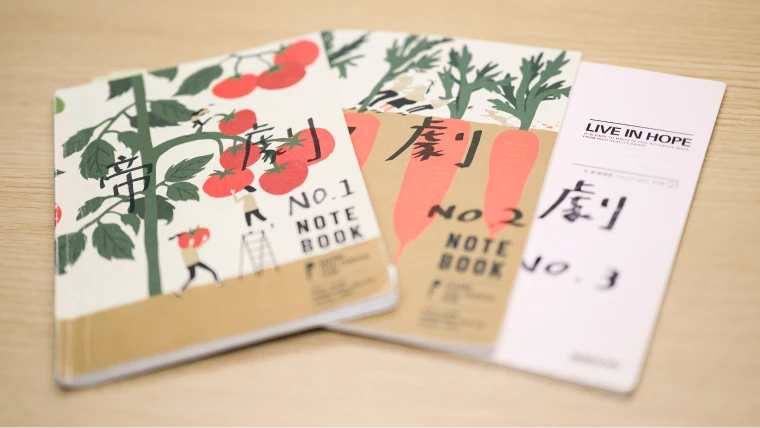
The notebook Ogawa kept while researching and interviewing at the Imperial Theatre.
Searching for a tangible experience no screen can replicate
――Why do you keep going back to the theater?
Today, we can watch almost anything at all through streaming. Precisely because we live in an age when almost everything can be viewed immediately through a screen, I believe there is value in changing your clothes, getting on a train, and making the effort to take yourself to the theater. The moment you step inside, the performance has already begun. The door to another world is standing open. To go and feel that atmosphere for yourself is something only a human being can do.
Above all, theater gives you a tangible experience that streaming will never provide. I suspect that is why musicals have grown so popular lately. Everyone is starving for a living texture, a sense of presence.
Seen in that light, a theater really is a magical place. The Imperial Theatre, although closed now for redevelopment, has received tens of millions of visitors across its long history. There must be so many people who are grateful for what they witnessed on that stage. Enough to fill a major city, I imagine, and then some.
To say yes to the present and dream of the future
――How do you see your relationship with the theater from here?
Because I came to love theater later in life, at first I sometimes regretted not having started sooner. The more I learned, the more I found myself thinking, “I wish I had seen that actor in the original production.”
But once, at a fan meetup for an actor, someone said to me, "The lucky thing is that you have met them now," and those words made me feel lighter. People who work in theater often think that way, I have found. They accept, with good grace, that the time that has passed is not coming back, and they say yes to the present and look ahead.
Buying a theater ticket is buying a piece of the future, making an appointment with it. You say yes to what happened today, and you buy a dream for tomorrow. Going to see a play, it struck me, is an act of that kind.
I came to the stage because a ballet lover, an editor, invited me, and now I am the one doing the inviting. I give theater tickets to my son and his wife. My dream at the moment is to go to the theater with my grandchild, once the child is old enough. Seeing a truly good theater performance can become one of life’s greatest treasures.